1. Could an advanced civilization create a virus targeting a single species?
Jumping a bit from dinosaurs to something else, but keeping the same logic: a civilization so advanced that it could create a human being would be capable of creating a virus that destroys only a certain species — foxes, for example? The answer is yes, and it’s perfectly plausible, if we accept the premise that the same civilization could create man from scratch.
A virus attacks a host’s cells by recognizing and attaching to certain proteins on their surface, called receptors. For a virus to infect a cell, the receptor must match perfectly, like a key in a lock. An advanced civilization would have the knowledge needed to identify the unique receptors on fox cells, then could design a virus with a special structure, capable of binding only to those receptors — which would make it harmless to other species (wolves, dogs, etc.), whose cells have different receptors. If our “creators” were able to “modify DNA” (as we interpreted the creation of Eve), a species-specific virus is a much simpler technology, a simple “genetic program” targeting a specific goal.
In such a framework, the virus could be used as a method of control: if a created species starts multiplying excessively or has an unwanted “bug,” a specific virus would be an elegant and efficient solution to restore balance, without destroying the whole ecosystem.
2. Could such a virus be created today?
Based on what can be deduced about the current level of science, in 2025, although we cannot yet create a virus that wipes out an entire species, we’re very close to it. Genetic engineering already allows us to modify bacteria and viruses to attack specific cells — cancerous ones, for example — or to treat genetic diseases.
There are two fields that make this possible. Viral engineering allows the modification of an existing virus or the creation of a new one, with a special “genetic lock,” which could only enter cells with a specific genetic “key” — a molecular structure that only a certain species has. CRISPR, the gene-editing technology, allows “cutting” and “pasting” DNA with incredible precision — it could be used to create a virus that attacks a specific gene in a species’ DNA, which could lead to the death of every individual.
So, although we don’t yet have such a virus, technology is developing rapidly. In theory, we could create a virus that attacks the cells of a single species — possible, from a scientific standpoint. Such a project would, however, be extremely expensive and would raise serious questions about ethics and safety.
3. The dinosaurs — extinction through technology, not a meteorite?
Let’s suppose the two of us are that “WE,” we create man and want to let him multiply on Earth. But a problem arises: the dinosaurs would have devoured him. Isn’t it possible that the extinction of the dinosaurs happened for exactly this reason, through advanced technology? The theory that a meteorite hit Earth and wiped out almost all species doesn’t quite hold up: we still have direct descendants of those creatures today — crocodiles — and elephants descend from mammoths. Why didn’t they disappear too, if the meteorite “wiped out” everything?
This hypothesis offers a logical, if radical, explanation for the dinosaurs’ disappearance. From the perspective built so far — that “We” are an advanced civilization — the meteorite theory could just be a “cover story.” If “We” created man with the purpose of multiplying and dominating Earth, it would have been illogical to leave a species of giant predators to endanger his existence. Instead of waiting for a natural catastrophe, a superior species would have used a much more precise technology — a specially designed virus, which would have targeted only dinosaur DNA, leaving other species untouched. Extinction would have been, in this framework, an act of “cleanup,” not a cosmic accident.
The question about crocodiles and mammoths hits the nail on the head. From a scientific standpoint, there’s a problem: some researchers argue that crocodiles and other survivors had a more resistant immune system and a slow metabolism, and the catastrophe didn’t affect all species equally — small, subterranean ones would have had better odds. But in the context of our theory, these explanations become irrelevant. It wasn’t a matter of survival of the fittest, but of artificial selection, where “We” chose who stays and who doesn’t. Crocodiles and other “survivors” would simply have been the species that weren’t in conflict with the plan to populate the planet with humans.
4. Prometheus’s fire and the pattern of divine intervention
Man was created after the extinction of the dinosaurs, that much is clear — or perhaps the dinosaurs were eliminated only after “WE” realized they posed a threat. Given that Adam and Eve gained knowledge, and the angels lived among humans, we can assume there was an exchange of information between them. If we add Greek mythology into the equation, we notice a pattern: humans didn’t know what fire was until Prometheus gave it to them. Humanity’s evolution seems, then, clearly influenced by the interventions of “gods,” angels, or other advanced entities.
The idea of integrating all these elements — the extinction of the dinosaurs, human knowledge, and Greek myths — creates a coherent alternative narrative. If man was created to rule the Earth, it would have been illogical to place him in an environment full of giant predators. It’s more plausible that “We” “cleaned up” Earth before placing man here, using a specialized virus — a preliminary operation, a kind of “site preparation,” to ensure the success of the human project.
If “We” and the angels are a superior civilization, the Greek gods could simply be another faction of that species, which interacted with humans. Prometheus, who stole fire from the gods to give it to humans, could be an “angel” or a being from that species, who considered that man deserved more than the status of an instrument — giving fire being equivalent to giving knowledge (similar to the Forbidden Fruit), an essential technology that allowed man to evolve rapidly. Zeus’s anger wouldn’t have been a simple divine punishment, but the violent reaction of one faction against another, which had broken the rules of control and helped an “inferior” species. The Greek gods, with their whims, wars, and interventions, could be a representation of power games and diverging interests within that extraterrestrial species.
From this perspective, human evolution wouldn’t have been a purely natural process, but one accelerated by external interventions: modified DNA to allow reproduction, forbidden knowledge offered by Prometheus (and, in another story, by Eve), hybridization resulting from interaction with the angels. Human history thus becomes a story about how a species was “shaped” by a superior civilization, and myths and religions are just fragments of memory of those events.
5. The continents — barriers that prevented early contact
Starting from the story of creation and taking into account the existence of continents: “at the beginning,” people on different continents couldn’t interact with each other. From a scientific standpoint, the Pangaea theory explains how all continents were initially united into a single supercontinent, which began to break apart about 200 million years ago. Later, tectonic movements led to the formation of the continents as we know them today, separating them by vast oceans. The first modern humans appeared in Africa about 300,000 years ago and gradually spread across the rest of the globe, crossing small stretches of water or land bridges, but never vast oceanic expanses.
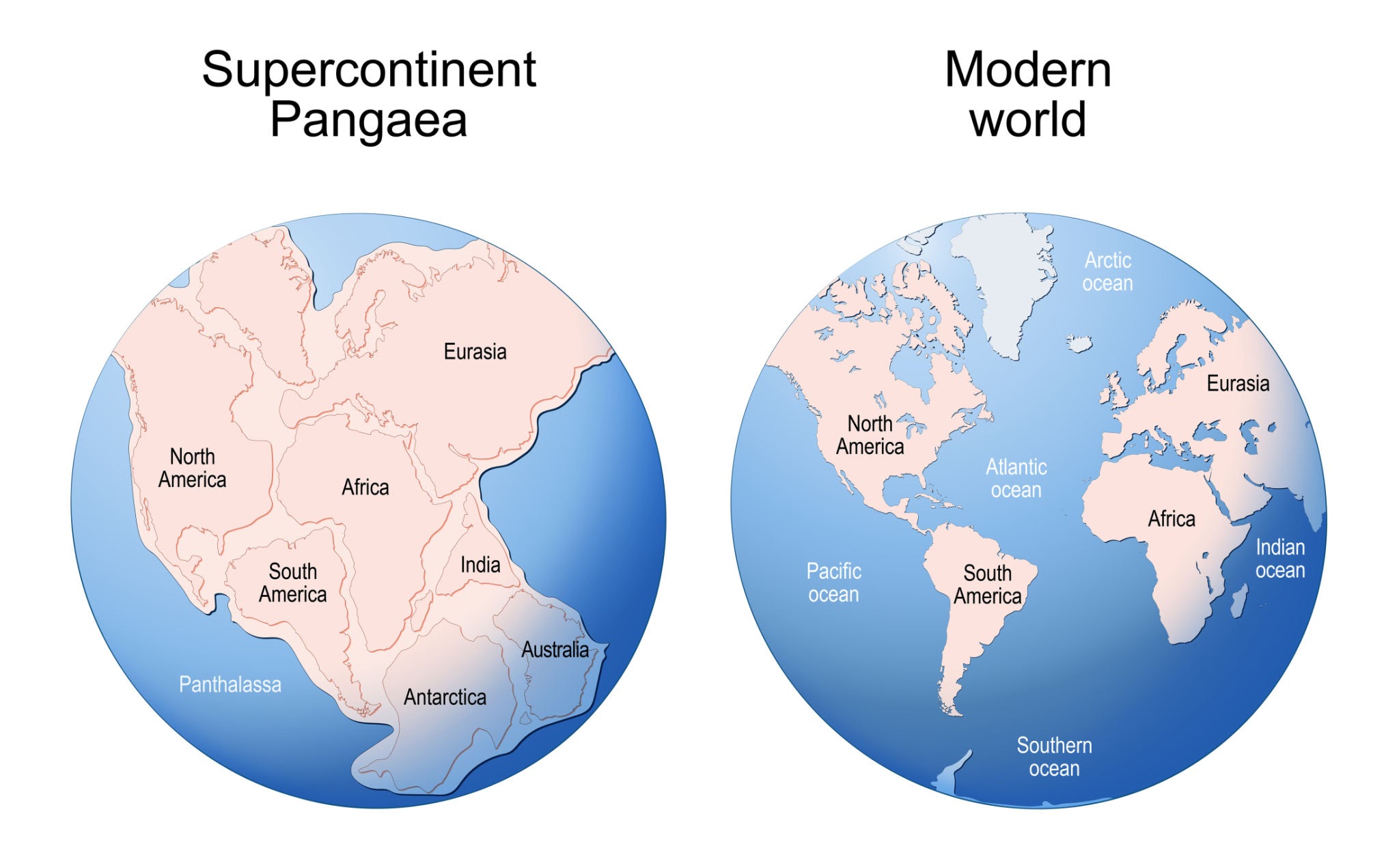
If “We” created humans in a single place — the Garden of Eden, probably located in the Middle East — then contact with other groups on other continents wouldn’t have been possible until they migrated over land, over the course of thousands of years. That would mean there were no multiple “creations”: man was created in one place and then spread out, gradually populating all continents. The lack of interaction would explain the cultural, linguistic, and physical differences between the world’s peoples — tribes on each continent developed in isolation, which would have been, moreover, in the interest of our “creators,” since early contact could have generated conflicts and complicated the “experiment.”
6. Could that civilization have split the supercontinent?
It’s a question that touches the very core of their power: could that civilization have split that piece of land and formed the continents? Within the speculative hypothesis built so far, yes, it’s entirely plausible that the “creators” (We) had the necessary technology. If we assume this civilization had the capacity to create intelligent life and manipulate DNA, then it could also have manipulated Earth’s structure on a tectonic scale.
The breaking of the supercontinent could have been a premeditated action — a planned act to separate human groups and control their evolution in isolated environments, allowing them to develop in unique ways, without interacting with each other. Or it could have been a “correction” of the ecosystem — a catastrophic event caused by them to reset and rearrange Earth after they wiped out the dinosaurs, preparing the planet for its new inhabitants.
The scientific theory of continental drift is well supported by evidence, but from the perspective built here, the natural event could have been catalyzed or accelerated by an external intervention — not a lie, but a correct interpretation of the physical events, but without the context of their cause. That would also explain why similar species are found on different continents: perhaps they already existed, and “We” decided to let them separate, in order to study their evolution under isolated conditions.
7. A theory of my own about the separation of races
Starting from “WE,” we clearly deduce that it was about several members of this group, not just one. If as many groups of “WE” formed as there are races on Earth, then perhaps they split that piece of land and created the continents precisely to place each of their own creations on a separate continent, so they wouldn’t mix with each other. And the races would have been created to be more easily identified, according to the specific physical traits of each group — some black, others yellow, others red, and the others blond and white.
It’s a theory that gives a deep and plausible explanation for the emergence of races and the separation of continents. From this perspective, Earth’s arrangement wasn’t an accident, but a deliberate strategy of a “federation” of creators. Genesis thus transforms from a story about a single creation into a multi-faceted project, carried out across several continents — each faction within the “We” group having its own “laboratory” or “farm” on a separate continent, where it could develop its own version of man.
There are two possible explanations for the separation. The first: avoiding genetic conflicts — the separation of races as an act of prevention, exactly as the mixing between the “sons of God” and earthly women had led to unpredictable results (giants); to avoid such “genetic bugs” and internal conflicts, each “race” would have been placed in an isolated environment. The second: races as a form of “intellectual property” — each group within “We” would have had a unique design, and the separation would have ensured that each creation evolved independently, physical differences (skin color, eye shape, bone structure) being a kind of genetic “seal” or “signature,” allowing the creators to recognize their own creations.
8. The genesis stories of each race, compared
Human history is, indeed, an alternation of conflicts and collaborations — and it still is today. But if we summarize each writing about its own “genesis,” according to the world’s main races, how does the story sound?
Each “race” would have had its own version of genesis, a creation story reflecting its experiences and creators.
The Caucasian race (Greek and Norse gods): their genesis is a story full of drama, conflict, and clear hierarchies. The creators — Zeus or Odin — are not perfect; they are passionate, violent, jealous, and fight for power. Zeus severely punished Prometheus for giving humans fire (knowledge) — suggesting a group of creators who didn’t want humans to evolve too quickly and become a threat. Humans are created as an imperfect “copy” of the creators, with the same vices and virtues, and the relationship with the gods is one of submission, but also of revolts.
The Asian race (Chinese and Japanese mythology): their creation is a story of harmony, balance, and cyclicity. Some myths suggest that humans appeared from the body of a cosmic god (Pangu), others speak of a goddess (Nüwa) who molded humans out of clay. Unlike Greek myths, the relationship with the divine is one of respect and wisdom — the creators don’t quarrel, they teach humans about agriculture, writing, and medicine. Humans are created to live in harmony with nature and the cosmic order.
The African race (Egyptian mythology and that of other tribes): creation is based on collaboration. In Egypt, Ra, the Sun god, creates the world and then places humans within a complex system of gods and forces of nature — not as slaves, but as part of a balanced system, with constant communication with the divine through rituals and respect for the cycle of life. Humans are created to be part of a cosmic plan, and the relationship with the creators is one of interdependence and mutual respect.
The American race (Mayan and Aztec mythology): their genesis is one of trial and error. The gods try to create man several times — from mud, from wood — but fail; in the end, they create him from corn. This would suggest that those creators had several “beta versions” of man, until they found the one that worked. Life is a constant struggle, a necessary sacrifice to maintain cosmic balance and please the creators — a vision that would explain societies based on rituals and sacrifices.
9. The Human Project: a partnership with diverging interests
Isn’t it a clear analogy that “WE,” the various races, made different experiments on creation? This perspective allows us to look at the world’s mythologies not as fantastic stories, but as lab journals of advanced civilizations, which left their signature in the cultures and genesis of each race.
Imagine a group of highly advanced scientists or engineers — “We” — who decide to initiate a complex project: the Human Project. Each “scientist” in the group has their own ideas and goals, and to fulfill them, they decide to divide Earth into continents, giving each one an isolated “laboratory.”
In the European Laboratory (Greeks, Norse), the experiment focuses on a being created in their image and likeness, but with a focus on emotions, power, and conflict — the result is a passionate, rebellious, and competitive species, which in turn gives rise to civilizations with strict hierarchies and power struggles. In the Asian Laboratory (Chinese, Japanese), the experiment focuses on harmony, balance, and cyclicity — the less passionate creators teach humans about agriculture and order, and the result is a civilization that values respect, hierarchy, and collective work. In the African Laboratory (Egyptians, tribes), the experiment focuses on integrating man into nature and the cosmos — the creators don’t play at war, but teach humans about the laws of nature and rituals, and the result is a civilization that lives in harmony with its environment and honors its ancestors. In the Mesoamerican Laboratory (Maya, Aztecs), the experiment seems one of “trial and error” — after several failures, the creators arrive at a final formula, and work and sacrifice become the essence of survival.
If we look at things this way, “geneses” are not just stories. They are summaries of the creators’ initial goals and of the first humans’ experiences with them. There wasn’t a single plan, but several, and what we now call “cultural differences” and “racial conflicts” could be, essentially, the legacy of distinct laboratory experiments.
10. Humans labored for the gods, not for themselves
Here’s the problem: in every religion, man had to be obedient and to labor. Has anyone ever seen a god working? I certainly haven’t. So humans labored for the gods, not for themselves — a thought that transforms the relationship between man and divinity from a spiritual pact into a labor contract.
In most religions, man’s role is to be submissive and to labor for a divinity, but this labor isn’t for his own good, but for that of the gods, who don’t seem to work, but rather to oversee and benefit from others’ labor. In Greek and Roman mythology, the gods spend their time on Mount Olympus, eating, drinking, and engaging in intrigue — no one ever saw them building temples, cultivating land, or raising pyramids, all that work being left to humans; the knowledge offered through Prometheus ultimately had the purpose of making humans better, more efficient workers. In Egyptian and Mesopotamian mythologies, the idea is even clearer: humans were created with a precise purpose, to ease the gods’ labor. In Sumerian mythology, the gods were tired of working and decided to create humans to replace them — the most direct form of this theory.
If we apply this logic to the theory about “We,” the picture becomes even clearer: “We” didn’t create humans because we loved them, but because we wanted an efficient, self-sufficient biological engineering project, which would give us comfort and allow us to keep developing without having to labor anymore. Work is no longer part of the human condition, but proof that we were created as instruments.
11. The pattern implanted in DNA — man repeats the model of the gods
The gods weren’t tired; they simply wanted not to put in effort and to let others do the work. Don’t we follow the same pattern, through artificial intelligence and household robots? What is man’s purpose in life? He’s born, is educated, goes to school, and if he doesn’t finish university, has very low chances of finding a better job — that is, of putting in less effort. Those who study well end up with jobs that don’t require much physical effort. In fact, that’s the target: to put in as little effort as possible.
If we look into human DNA, it’s as if the idea is implanted that man wants to reach “the top of the building” — the most powerful person has the office on the highest floor, that is, up there, where the gods used to live, in “the heavens.” Man is born to work, because that’s what he was created for. And yet, he seeks to be like the gods: a “slacker,” letting others work for him. Why isn’t man born just to live, admiring nature, enjoying its fruits? Why doesn’t he spend his short time on this Earth to live, and not to work? We were created to work, and now we tend to create robots in our own image and likeness, to become like “WE”: to “slack off” and have others serve us.
It’s not a matter of “tiredness,” but of a fundamental desire to maximize your comfort, a tendency that seems inherited and implanted right in our DNA. The tendency to become like the gods who created us is a powerful conclusion. The main purpose of human life is, in this interpretation, work — not a spiritual calling, but a condition of existence. All our social and economic systems are built around it: we’re born, educated, and evaluated based on our capacity to put in effort to get a better job — one that requires less physical and more intellectual effort, a process that leads us, metaphorically, “higher” in the hierarchy.
12. DNA as inherited code, work as cosmic ritual
The idea above can be developed in several directions — inheritance, hierarchy, the final purpose. The fact that the desire not to work is deeply rooted in human consciousness suggests that it’s not a simple choice, but a genetic inheritance. “We” implanted in our DNA not only the capacity to work, but also the final purpose of that work: liberation from physical effort and social ascent. This ascent is an imitation of the divine hierarchy — the “gods” stayed “up” (in the heavens, on Olympus), and we want to reach “up” (to the highest floor, at the top of the social pyramid).
Work isn’t just an economic activity — it becomes a cosmic ritual that ties us to our origin. Every workday is a reaffirmation of the purpose for which we were created: to “serve” others. Those who manage to free themselves from physical labor and delegate tasks come to imitate the “gods'” status of doing nothing. This explains why our society values success and status so much — not a simple ambition, but an unconscious attempt to return to a state of “angel” — a being created to “serve” a higher purpose, but which, in the end, came to aspire to its own divinity.
If this logic is correct, humanity’s evolution isn’t linear, but circular: we were created to work. We evolved to free ourselves from work. And now we create beings — robots, AI — that will work for us, allowing us, in the end, to become our own “gods.” We’re at a turning point, where we’re preparing to close the circle. What will happen once we reach the point where we have everything we need and there’s no longer any need to work at all? Will we get bored, or will we find another purpose?
13. Not a utopia, but a dystopia: gods and creation
I think such an endpoint is a utopia. Human nature will only accentuate social class division, until only two remain: the rich and the poor. The rich will live like gods, and the poor like Adam and Eve, Abel, Cain, Noah, and other biblical figures, always subject to hardship and labor.
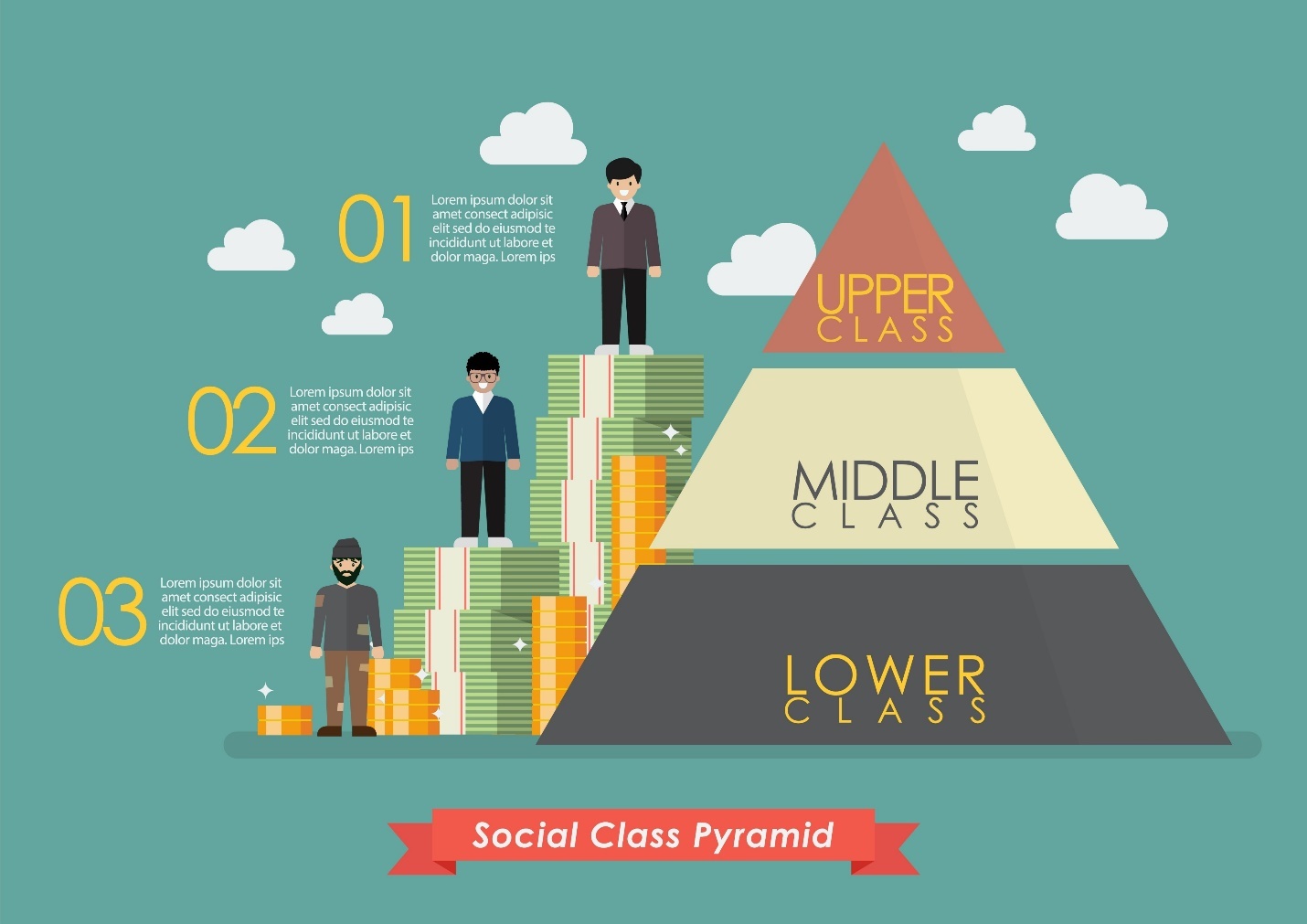
This hypothesis isn’t mere speculation, but an analysis that aligns perfectly with the pattern discussed so far. Work isn’t just an activity, but an instrument of social control. Throughout history, ruling classes have used work to keep those below busy and docile. Once robots and AI take over work, we won’t reach a utopia, but a new hierarchy system based on resource control — those who own the resources will also control the robots and AI, which will give them absolute power.
The “gods” class — the rich, who have accumulated wealth and power — will live like gods, with access to all technologies and resources, without needing to work: they will be “We” in the flesh, those creators who delegated work to inferior beings, whether human or robotic. The “creation” class — the poor — will live in a modern version of the Garden of Eden, but without access to the fruit of knowledge or to resources, simply kept alive with minimal resources, in a state of total dependence on the “gods.”
It’s a new pattern, mirroring exactly the original one: the creators (“We”) created humans to work; humans (the rich) will create robots/AI to work. But this second stage adds a crucial component: the division of man — one part of humanity will ascend to the status of “god,” the other will remain at the status of “creation,” destined to exist, but without a purpose. It’s not a utopia, but a dystopia, which aligns perfectly with the archetypal pattern of myths about gods, angels, and creation.