Laur Manea: Who was Thoth?
Assistant: Thoth (Djehuty), in real Egyptian mythology: the god of wisdom, writing, magic, the moon, and science. Usually depicted as a man with the head of an ibis, sometimes as a baboon. Credited with inventing hieroglyphs and serving as the scribe of the gods — the one who recorded everything, including, in the Book of the Dead, the outcome of the weighing of the deceased soul’s heart before Osiris (if the heart is lighter than the feather of Maat, the soul passes on). His cult center was Hermopolis. The Greeks equated him with Hermes, and from the merging of the two emerged the syncretic figure of Hermes Trismegistus (“thrice-great”), the source of the Hermetic tradition — from there comes the famous, genuinely ancient (unlike Doreal’s tablets) Tabula Smaragdina, the Emerald Tablet of Hermes, a single short alchemical text, not 15 tablets.
Thoth in Doreal’s text (the one we’re drawing the incantations from): a completely different, modern story — Thoth would have been a real priest-king of Atlantis, a survivor of the continent’s destruction, who emigrated to Egypt, ruled there for centuries (thanks to the “elixir of life”), built the Great Pyramid, and was only deified by the Egyptians after his death as the god of wisdom we know from mythology. It’s a 1930s occult narrative, not authentic history or mythology — but it explains why the names overlap: the author wove his story over the real Egyptian god, to give it weight.
Laur Manea: How did the Atlantean one reach the elixir of life?
Assistant: According to Tablet I, Thoth did not obtain an elixir to drink, but achieved immortality through spiritual mastery and direct initiation by the Dweller. Thoth describes his transformation as occurring through profound spiritual training in the Temple. The key passage: “Long ages I dwelt in the Temple, learning ever and yet ever more wisdom, until I, too, approached the light emitted from the great fire.” The Dweller then granted him the ultimate gift: “Taught me he, the path to Amenti, the underworld where the great king sits upon his throne of might… receiving as my gift the key of Life.” Rather than drinking a potion, Thoth was made “Free of the Halls of Amenti, bound not by death to the circle of life.” This allowed him to transcend physical death itself. In Egypt, Thoth maintained his powers through deliberate spiritual practice: “Blasted I then a path to Amenti so that I might retain my powers, living from age to age a Sun of Atlantis.” His immortality enabled him to guide Egyptian civilization for approximately 16,000 years, functioning as an eternal teacher and keeper of wisdom.
Laur Manea: Tell me about the “Children of Light” as an origin/race.
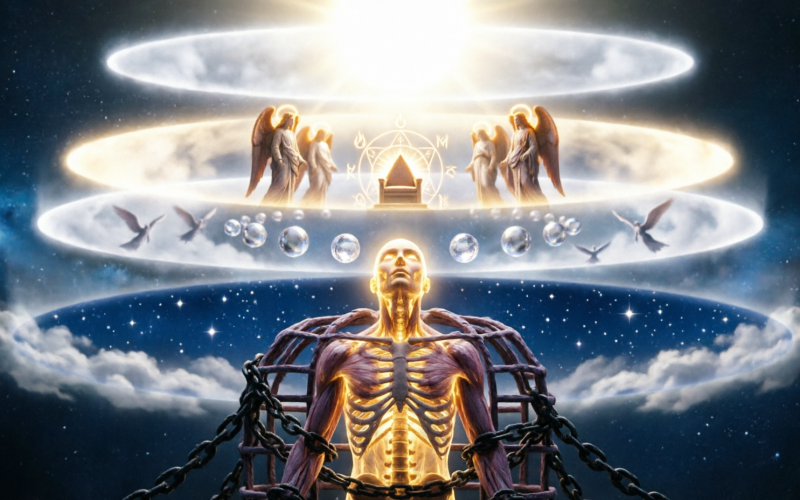
Assistant: Origin and provenance, according to Tablet II: “Far in a past time, lost in the space time, the Children of Light looked down on the world.” They descended in order to free humanity: “Down they descended and created bodies, taking the semblance of men as their own.” They numbered 32: “Thirty and two were there of the children, sons of Light who had come among men, seeking to free from the bondage of darkness.” Nature and characteristics: “Not as the sons of men are the Children of Light when they are not incarnate in a physical body.” They dwell in the Halls of Amenti: “There in the Halls of Life they lie sleeping; free flows their Soul through the bodies of men.” Their activation periods: “One hundred years out of each thousand must the Life-giving Light flame forth on their bodies.” Their relationship with earthly men: “Time after time, while their bodies lie sleeping, incarnate they in the bodies of men. Teaching and guiding onward and upward, out of the darkness into the Light.”
Laur Manea: Who exactly were the Seven Lords?
Assistant: The text gives them no proper names — they are named only by number-titles, from Three to Nine (there is no separate “One” or “Two” mentioned, probably reserved for another rank), each with a distinct domain. Three — “holds the key of all hidden magic, creator he of the Halls of the Dead.” Four — “he who looses the power. Lord, he, of Life to the children of men.” Five — “the master, the Lord of all magic — Key to The Word that resounds among men.” Six — “the Lord of Light, the hidden pathway, part of the souls of the children of men.” Seven — “he who is Lord of the vastness, master of Space and the key of the Times.” Eight — “he who orders the progress; weighs and balances the journey of men.” Nine — “the father, vast he of countenance, forming and changing from out of the formless.” So each rules over a fundamental aspect: death, life, magic/word, light/soul, space-time, judgment/balance, and, at the top, forming from the formless.
Their origin, in their own words (Tablet VII): “From far beyond time are We come, O man. Traveled We from beyond the Space-Time, aye, from the place of Infinity’s end.” So they aren’t even from the ordinary universe. Their nature: “Not as men are We though once We, too, were as men” — suggesting they passed through a human/material stage but evolved beyond it. “Formless are We. Life have We not but yet have existence, fuller and greater and freer than thee.”
Laur Manea: See what Tablet VIII (The Key of Mysteries) says about how the Seven “manifest” through power.
Assistant: Tablet VIII does not speak directly about the Seven manifesting through power, as one might expect. It focuses on something else: the nature of mystery itself — “Mystery is but hidden knowledge. Know and ye shall unveil” — so this tablet is more philosophical, about spiritual attainment through Light and wisdom, not an invocation manual. It also contains warnings about entities from “the kingdom of shadows” — distinct from the Seven Lords, more of a dark counterweight to them, possibly related to the “Brothers of Darkness” from an incantation we’ll see below.
The actual invocation ritual, with procedural details, is in fact in Tablet X (The Key of Time), where Thoth describes calling forth a being from other planes, using the drum of the Serpent, the robe of purple and gold, the crown of Silver, a circle drawn in cinnabar, and an invocation addressed to the “Lords of the two horizons.”
Laur Manea: The complete ritual from Tablet X.
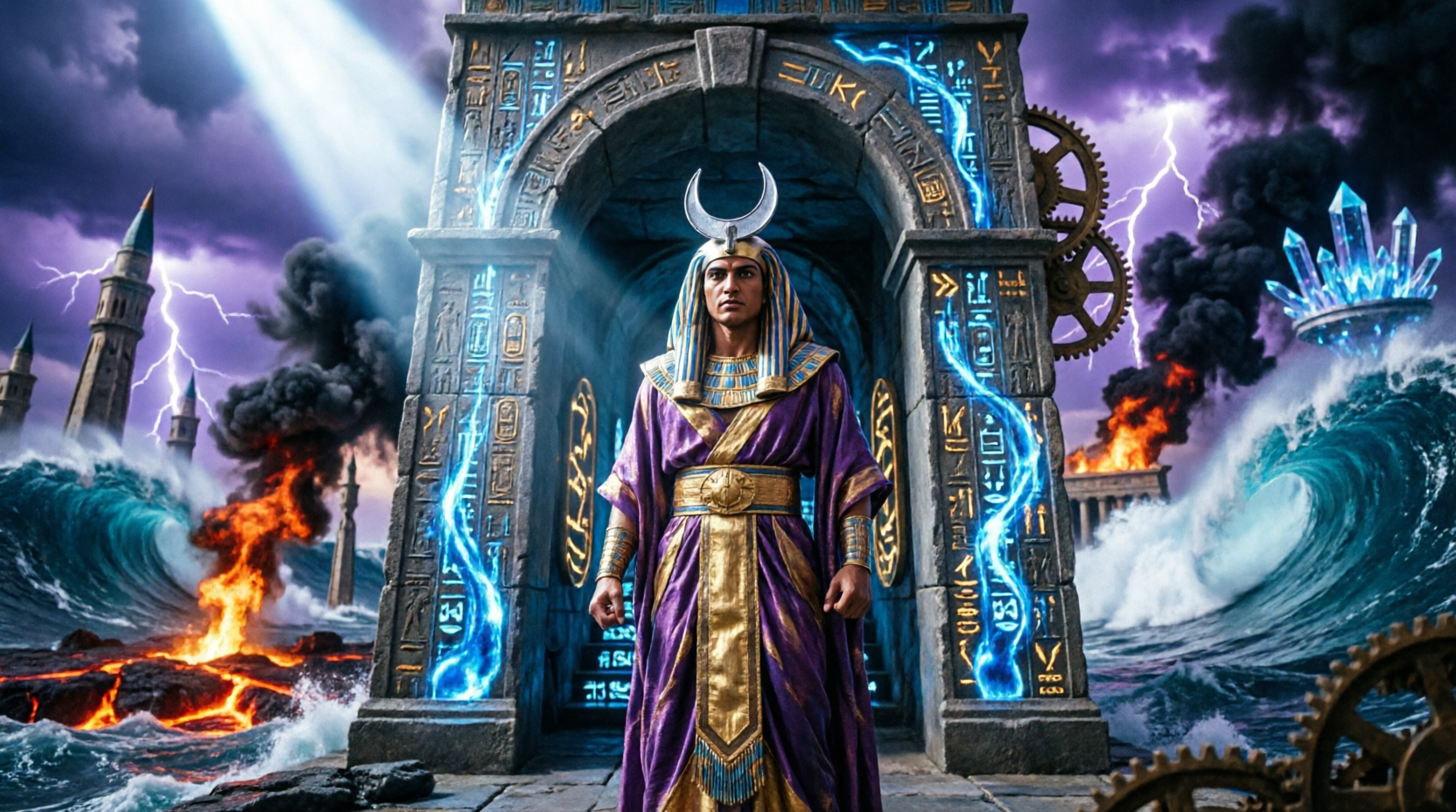
Assistant: Here is the complete ritual, in chronological order, as Thoth tells it about himself. Preparation: he fasted beforehand — “Food have I not eaten. Water have I not drunk” — dressed in “the robe of the purple and gold,” placed on his head the crown of Silver, used the drum of the Serpent, drew a circle that “shone” with cinnabar, which he then lit with flame. The exact invocation spoken: “Lords of the two horizons, watchers of the treble gates, stand ye One at the right and One at the left as the Star rises to his throne and rules over his sign. Aye, thou dark prince of Arulu, open the gates of the dim, hidden land and release her whom ye keep imprisoned.” He added a formula of constraint: “by their secret names, names which I know and can pronounce, hear ye and obey my will.” The direct summoning of the being: “Daughter of Light return from Arulu… I summon thee, Lady of Light.” The result: “Then before me rose the dark figures… forth came the Lady of Light. Free was she now from the Lords of the night.” Thoth’s own conclusion about magic in general: “Magic is knowledge and only is Law” — essentially saying that magic is not arbitrary power, but knowledge applied within the bounds of a universal law. Arulu appears to be a dark, underworld-like realm, perhaps a variant of Amenti but with a grimmer connotation, ruled by a “dark prince,” from which he rescued this captive “Lady of Light.”
Laur Manea: Go further.
Assistant: The cause of the destruction of Atlantis, according to Tablet I: the Atlanteans descended into forbidden practices — “Downward into darkness turned the thoughts of the Atlanteans, until at last in his wrath arose from his Agwanti, the Dweller.” Tablet V elaborates that certain individuals “delved into the forbidden, opened the gateway that led to below,” seeking forbidden knowledge from lower realms.
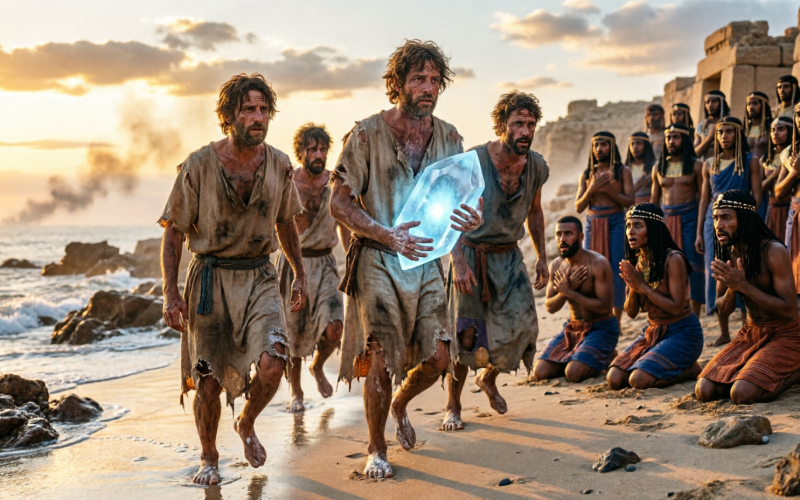
Who caused it: the Dweller (the Master) intervened after detecting the danger: “Saw He the Atlanteans, by their magic, opening the gateway that would bring to Earth a great woe. Fast fled His soul then, back to His body. Up He arose from His Agwanti. Called He the Three mighty messengers. Gave the commands that shattered the world.” The destruction event, from Tablet I: “Deep in Earth’s heart, the sons of Amenti heard, and hearing, directed the changing of the flower of fire… Over the world then broke the great waters, drowning and sinking, changing Earth’s balance.” The warning and Thoth’s escape: the Dweller commanded him directly: “Take thou, O Thoth, all of your wisdom… Gather thou now the sons of Atlantis. Take them and flee to the people of the rock caves.” Thoth responds: “Gathered I then my people and entered the great ship of the Master. Upward we rose into the morning… Fast we fled toward the sun of the morning.”
Laur Manea: Continue.
Assistant: “Fast we fled toward the sun of the morning, until beneath us lay the land of the children of Khem” — Khem being the ancient name for Egypt. The first encounter with the locals was not peaceful: “raging, they came with cudgels and spears lifted in anger seeking to slay… Then raised I my staff and directed a ray of vibration, striking them still in their tracks.” Diplomacy followed afterward: “spoke to them in words calm and peaceful, telling them of the might of Atlantis, saying we were children of the Sun and its messengers. Cowed I them by my display of magic-science.” The text constantly combines “magic” with “science,” as though they were the same category for the author. Building and rule: “Long time dwelt I in the land of Khem, doing great works by the wisdom within me. Upward grew into the light of knowledge the children of Khem, watered by the rains of my wisdom.” The Great Pyramid, explicitly: “Built I the Great Pyramid, patterned after the pyramid of earth force, burning eternally so that it, too, might remain through the ages” — according to the text, the pyramid isn’t just a tomb or monument, but a replica of a “pyramid of earth force,” built to burn/function eternally.
The internal structure: “Raised I high over the entrance, a doorway, a gateway leading down to Amenti. Few there would be with courage to dare it, few pass the portal to dark Amenti. Raised over the passage, I, a mighty pyramid, using the power that overcomes Earth force (gravity).” The inner chamber: “Deep and yet deeper placed I a force-house or chamber; from it carved I a circular passage reaching almost to the great summit. There in the apex, set I the crystal, sending the ray into the ‘Time-Space,’ drawing the force from out of the ether, concentrating upon the gateway to Amenti.” Hidden chambers: “Other chambers I built and left vacant to all seeming, yet hidden within them are the keys to Amenti.”
This closes the first great arc of this research — the story as Thoth tells it. Part two puts every technical detail to the test of fact: how many of them are found in what archaeology and physics genuinely know today about the Great Pyramid.